Emergency Water Extraction in Epping
Standing water from leaks, burst pipes, appliance failures and flooding can damage floors, walls and other building materials. Our water extraction service helps remove unwanted water, assess affected areas and prepare your property for the appropriate drying process.
Professional Water Extraction in Epping for Homes and Businesses
Unwanted water can enter a property in several ways. A burst pipe, leaking appliance, overflowing sink, damaged hot water system, roof leak or storm-related flooding can leave standing water across floors and inside affected building materials. Even after visible water is removed, moisture may remain beneath carpets, behind skirting boards and within the subfloor.
Professional water extraction focuses on removing accessible standing water before it spreads further into the property. The equipment and method depend on the depth of the water, the size of the affected area, the flooring material and the condition of the building.
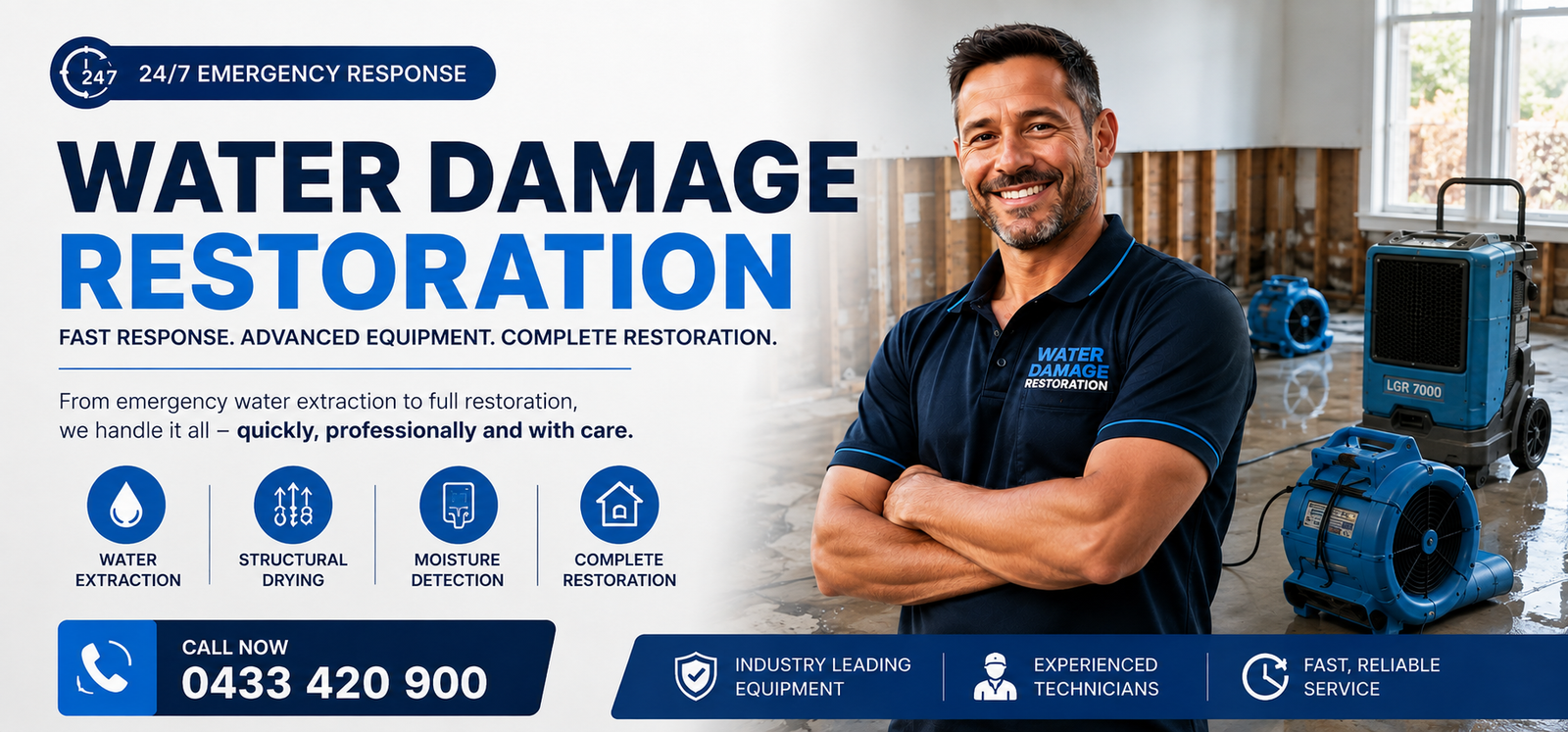
Our emergency water extraction service in Epping is available 24 hours a day, 7 days a week. We use suitable water removal equipment, assess the affected areas and determine whether further structural drying or specialist restoration work is required.
Common Causes of Indoor Flooding and Standing Water
Water damage can develop suddenly or go unnoticed until visible signs appear. Identifying the source helps determine the right response and whether plumbing repairs or other corrective work are needed before restoration can continue.
- Burst or Leaking Pipes: Failed plumbing connections and damaged pipes can release water into rooms, cupboards and concealed building spaces.
- Washing Machine and Dishwasher Leaks: Failed hoses, faulty connections and overflowing appliances can leave water across floors and beneath cabinets.
- Storm and Rainwater Intrusion: Heavy rainfall and water entering through damaged roofs, windows or other openings can affect internal areas.
- Hot Water System Failures: A leaking tank or connection can release water into nearby rooms and adjoining spaces.
- Bathroom and Kitchen Overflow: Blocked drains, overflowing fixtures and plumbing problems can cause water to spread beyond the original area.
- Flooded Garages and Lower Levels: Water entering garages, storage areas and other low-lying spaces may require suitable pumping equipment.
What Is Included in Our Water Extraction Service?
The work required depends on the circumstances of each water incident. After considering the affected area and the type of water involved, we select suitable extraction methods and identify any additional drying requirements.
- Standing Water Removal: Extraction of accessible water from affected floors and other suitable surfaces.
- Floodwater Pumping: Suitable pumping equipment can help remove accumulated water from flooded areas where conditions allow.
- Carpet Water Extraction: Appropriate carpet extraction equipment helps remove water retained within wet carpet fibres and compatible materials.
- Moisture Assessment: Inspection and appropriate moisture measurements help identify areas that may need further drying.
- Structural Drying Recommendations: Where moisture remains in walls, floors or other building materials, we assess the need for additional drying equipment and procedures.
- Moisture Monitoring and Reports: Relevant moisture readings and restoration findings can be documented to track drying progress and provide a record of the work.
- Insurance Documentation Support: Available photographs, moisture records and restoration documentation can help property owners prepare information requested by their insurers.
Water Extraction Equipment for Different Flooding Situations
Selecting suitable equipment is an important part of water damage restoration. The best approach depends on the amount of standing water, access to the affected area, the surface being treated and whether the water has reached concealed materials.
Industrial water extraction vacuums are used to remove accessible water from suitable surfaces. Submersible pumps can assist with accumulated water in areas where pumping is appropriate. Weighted carpet extractors help remove retained moisture from compatible carpeted surfaces.
Extraction equipment removes bulk water, but it does not automatically dry every affected material. Carpets, underlay, timber flooring, plasterboard and structural components may retain moisture after the visible water has gone. Additional moisture assessment and structural drying may therefore be needed.
Our Four-Step Emergency Water Extraction Process
A clear process helps establish what has been affected, remove standing water safely and determine what needs to happen next.
Initial Inspection and Safety Check
We assess the visible water damage, consider the source of the water and identify hazards that may affect the work.
Standing Water Extraction
Suitable extraction vacuums, pumps or carpet extraction equipment are selected according to the affected area and water conditions.
Moisture Assessment
Appropriate inspections and moisture measurements help identify damp materials that may require additional drying.
Drying and Restoration Plan
We determine whether further drying, monitoring, cleaning or repairs should be considered and document relevant findings.
Why Water Extraction Should Happen Promptly
Water can move beyond the area where a leak or flood first occurred. It may spread beneath flooring, enter wall cavities, soak insulation and affect nearby furniture or belongings. The longer wet materials remain untreated, the greater the potential for secondary damage.
Prompt extraction helps remove accessible standing water and allows the drying process to begin. It can also help limit the time that carpets, flooring and other materials remain saturated. However, the final outcome depends on the extent of the damage, the type of materials involved and how quickly the underlying moisture problem is addressed.
If you are dealing with a current water emergency in Epping, first consider your safety. Do not enter standing water where electrical hazards may be present. If the water is coming from a plumbing fault, arrange for the source to be isolated or repaired when safe to do so.
Residential and Commercial Water Extraction in Epping
Water damage can disrupt everyday life in homes and create problems for businesses that need to protect their premises, stock, equipment and work areas. The extraction requirements vary according to the layout and use of the building.
In residential properties, the affected areas may include kitchens, bathrooms, bedrooms, living rooms, hallways, garages and laundries. Water may also travel beneath flooring or into adjoining rooms, making a wider assessment important.
Commercial properties may experience water damage in offices, shops, storage areas and other occupied spaces. Extraction and drying plans should consider access restrictions, affected equipment and the need to keep people away from unsafe areas.
Whether the property is residential or commercial, our team can discuss the incident, assess the water removal requirements and explain the next steps for restoration.
Water Extraction, Structural Drying and Mould Prevention
Water extraction and structural drying are related but different stages of water damage restoration. Extraction removes accessible standing water. Structural drying addresses moisture that remains in affected building materials after the bulk water has been removed.
Depending on the situation, drying equipment may be needed to manage moisture in walls, floors, ceilings and other materials. Moisture readings can help assess progress and identify areas that need further attention.
Damp materials that remain wet for extended periods may also create conditions that support mould growth. Where mould is present or suspected, further inspection may be appropriate. Our mould remediation service addresses mould-related concerns, while wet carpet cleaning may be relevant to affected carpeted areas.
The correct treatment depends on the source and type of water. Water contaminated by sewage or other hazardous substances requires appropriate precautions and a suitable specialist response. Do not assume that every flooded surface can be safely cleaned using ordinary household products.
Water Damage Moisture Reports and Insurance Documentation
Property owners may need records of the water incident and the restoration work when communicating with their insurance company. Relevant documentation can include photographs of affected areas, inspection findings, moisture readings and details of the work performed.
Moisture monitoring can also help establish whether affected materials are drying and whether further work may be necessary. The records available will depend on the inspection and restoration services carried out at the property.
If you intend to make an insurance claim, check your insurer's requirements for documentation, approvals and repair arrangements. Keep records of the incident and any immediate steps taken to prevent further damage. Insurance coverage and claim decisions remain subject to your policy and your insurer's assessment.
Frequently Asked Questions About Water Extraction in Epping
Request Emergency Water Extraction in Epping
Water Extraction in Epping and Surrounding Suburbs
We accept emergency water extraction enquiries across Epping and nearby northern Melbourne suburbs. Contact us to confirm service availability and discuss your property's water damage.
Water emergency? Call 0433 420 900, any time, to discuss your situation and confirm availability in your suburb.